Rainbow Valley

Rainbow Valley
Malawi

Sunday, April 4, 2010

POST 2

Holy Easter! Where was I? Kodi muli bwanji? I am fine! It has been a while but Claire has kept you, our loyal followers, up-to-date. Here's the last bit of February for you from me. I'm also going to try to put up a few pictures too…Thanks for reading.

I went with Anacklet to the Catholic University of Malawi (Cunima) on Wednesday, February 24th, in my (only) suit and tie, to be seen around campus, to meet some of the faculty and to be part of a presentation of books by a local bank, NBS, to the University to the new library under construction. (The bank donated the books as part of a package that gives them exclusive presence with an ABM and 1 staff member on campus.  The Bank Executive, Gilford Kadzakumanja is a Rotarian of the Limbe Club. We three chatted and Anacklet said that our stories about Rotary were the same even though we are ½ a world apart. Anacklet is interested in what Rotary does in the world and is impressed with the actions in the local community. (I hope he will join while I'm here.) So, during the presentation of the books worth KW 1,000,000.00, Anacklet managed to sneak my name and the purpose of my visit to CUNIMA into his speech. He even had me stand and be acknowledged by the dignitaries and students in the lecture hall. Following the presentation I was given a campus tour and got a peek at the Campus flat that Claire and I will live in very soon. It is having a complete renovation and it is gorgeous; small, but just beautiful It is in the middle of the campus and right next door to the Parish… everything is being modernized. The 'house' was a home to monks/priests for about 50 years and those little tiny cells they slept in just wasn't gonna cut it for visiting consultants, professors and the like, especially if they are with their partner. Anyway, we're all hoping the flat will be ready by the end of next week. (However, Malawi time is much s l o w e r than back home. The contractors are also dealing with daily rotating black outs and as I already mentioned some serious downpours.)


After the presentation and tours and introductions and good byes, Anacklet and I made our way back to the house where we were in a blackout. That meant we, including Laureen, went out for Pizza; three large pizzas between 5 of us. Hmmm, let's see… Beef salami, jalapeƱo peppers and pineapples on one, Sweet and sour chicken, tomatoes and cheese on the second and Chambo (fish) and green peppers on the third. I bought the pop and water at a different fast food place and met another Rotarian from the Limbe club who had transferred from the Tete, Mozambique club a year or so ago. He knew the Rotarians who hosted the GSE team in 2008. How small is this world? According to John, the overnight gatekeeper, the power had returned a few minutes before we returned to the house.

Thursday morning we had breakfast and then we shopped at the big (Chichiri) mall. The same place we had had supper the night before. Anacklet dropped us and headed back to Lilongwe for a couple of days of meetings. Claire and I checked emails and Mary went for groceries. The rain began around 9:00AM and continued all day; until 9:00PM. After shopping, we took a 'taxi', a private car with no licence, no air and a severely cracked front window back home.


The new Internet Explorer® 8 - Faster, safer, easier. Optimized for Yahoo! Get it Now for Free!

Pictures - touring


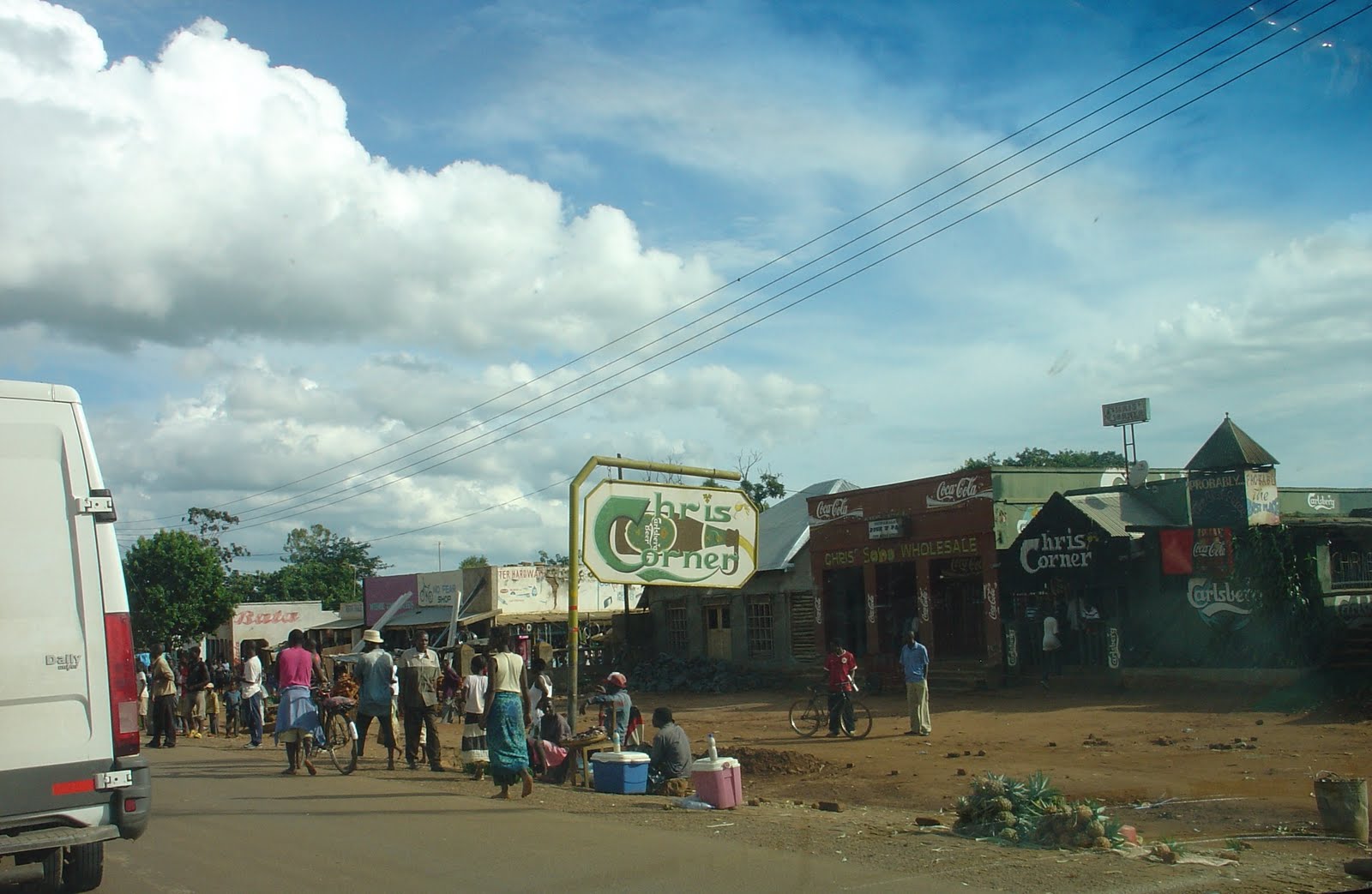
serious tree roots and some road scenes

Tuesday, March 30, 2010

Malawi Parents Worry About Their Kids

I looked up from the page at the clucking brown speckled mother hen, as she jumped up and away from her seven chicks. Counting heads, I thought, while she stood on the two-by-four that David had put there yesterday, after stacking five rows of bricks to make a temporary home for the young family. Just seven of the original nine chicks chirped today; the board had fallen onto two as he built the wall around them to protect them from the dangers lurking in the grass and overhead.

A ripe mango or an avocado pear could fall from a tree and crush a feathery warm body.

A guard dog, each of his ribs countable, could quickly snatch a curious chick before its watching mother could squawk and flap her angry wings in warning at the fluffy yellow innocent vanishing into the pink hungry snapping jaws.

‘Skus’ (crow-sized, magpie coloured scavengers) could lurk in the straight, thirty-foot tall, blue gum tree, eyes trained on the yellow and black chicks before fluttering down to the grass beckoning an invitation to the baby birds to come have a game of tag. There would be high-pitched chirps of excitement as the chicks ran to chase the tantalizing tail feathers of their new black and white playmates, not realizing they had been lured into a circle of hen-sized enemies. The skus would peck at the black shiny eyes and the short wrinkled legs of the chicks, with beaks no longer teasing but urgent, the scent of raw flesh, spiced with fear, and bits of salty blood feeding their lust to kill.

Downy feathers would float like soft light butterflies on the breeze past the prickly, white, scented rose blossoms, the first fresh blooms of the season, bobbing heavily, nodding wisely, and agreeing with Darwin’s theory.

As David stacked the red clay bricks into a wall, then laid the two-by- four piece of wood along the top layer of bricks, he clucked at the two motionless chicks with the broken necks, quiet now.

David’s workload was increased these days. John, the night-watchman, had taken most of the week off to be with his wife and family as they buried their six-month-old baby back home in their village. The young girl was dead of malaria after a short stay in hospital. Neighbours and family gathered with offerings of food, bits of money, sympathy, wailing. John’s employers had gone to the home, with their donation, and stayed four hours with the family. As many as were available travelled by mini-bus to the village for the ceremony and the burial, with the baby, its small weight wrapped in a blanket.

David and John both worried, as all parents must, if their children would survive the dangers lurking throughout Malawi. Now, one more was dead by the tiny insects who carry death in their bite.

The water grows parasites, and during the rainy season, the streams, rivers, and ditches where the women and children wash laundry, turn into muddy brown roiling torrents. Last week two adults had been swept away, drowned while crossing a river. Luckily neither had carried a baby tied in a chitenje around their back or there’d have been a third or even a fourth casualty.

If a child grows to school age there’s be the concern of affording an education. Primary schools to form eight are government funded and these are legally available to all children, though some stay home to look after disabled relatives, and some villages are too isolated for kids to attend school. For some, the raging river waters make the trip to school too dangerous and it is safer they be kept at home where there is always a floor to be swept with a branch, goats to be herded, peanuts or potatoes to be sold at the roadside in season.

Forms nine and higher are privately-paid and so less well-attended although almost everyone agrees that the only way to improve oneself and one’s family is through education.

David and John discussed these things often as they cooked their nsima over the charcoal grill provided by their employer in the workers’ quarters. They work six 12-hour shifts every week tending the gardens, and the lawns, guarding the gate, washing cars, and carrying. Manual work is the destiny of those who didn’t receive an education and if they are fortunate they’ll find a full-time job rather than begging on the streets for piecework or for food.

David kicked away the guard dog sniffing at his bare foot. He missed the nightly discussions with John.

pics - 2000 wordsworth!